
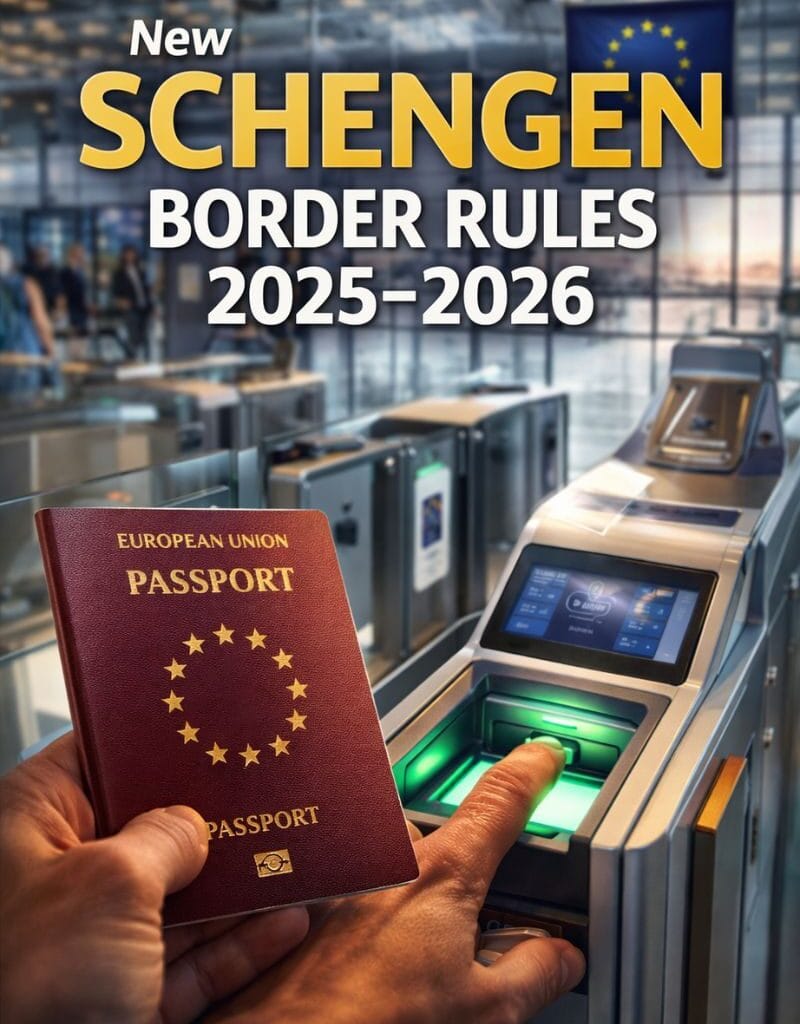
Travelling to Europe has become more digital with the introduction of the European Union’s Entry/Exit System (EES). The new system replaces traditional passport stamping with electronic records and biometric checks for eligible non-EU travellers entering or leaving the Schengen Area for a short stay.
The EES rollout began in October 2025 and became fully operational on 10 April 2026. If you are planning a European holiday, it is important to understand how the new border procedures work, what information may be collected and whether you need to do anything before travelling.
Here is what travellers need to know about the new Schengen biometric border rules.
What Is the Schengen Entry/Exit System (EES)?
The Entry/Exit System (EES) is an automated European border management system designed to digitally register non-EU nationals travelling to participating European countries for short stays.
It replaces the traditional practice of manually stamping passports with electronic records of travellers’ border crossings.
The system records information such as:
- Passport and travel document details
- Date and place of entry and exit
- Facial image
- Fingerprints, where required
- Information about refusals of entry, where applicable
The EES helps border authorities monitor short stays, identify overstays and verify travellers’ identities more effectively.
It does not change the existing Schengen short-stay allowance of 90 days within any 180-day period.
When Did the New EES Border System Start?
The EES was introduced gradually rather than being activated everywhere at once.
Key implementation dates:
- 12 October 2025: The gradual rollout began at external borders.
- October 2025–9 April 2026: Participating countries introduced the system in phases.
- 10 April 2026: The EES became fully operational across the participating countries.
This means travellers should now expect electronic registration instead of routine manual passport stamping when crossing an external EES border.
Which Countries Use the EES?
The EES operates across the 29 countries in the Schengen Area, including:
- Austria
- Belgium
- Bulgaria
- Croatia
- Czechia
- Denmark
- Estonia
- Finland
- France
- Germany
- Greece
- Hungary
- Iceland
- Italy
- Latvia
- Liechtenstein
- Lithuania
- Luxembourg
- Malta
- Netherlands
- Norway
- Poland
- Portugal
- Romania
- Slovakia
- Slovenia
- Spain
- Sweden
- Switzerland
Important: Ireland and Cyprus do not currently participate in the EES. Cyprus is included in the planned ETIAS travel authorisation system, which is separate from EES.
Who Does the Entry/Exit System Apply To?
The EES generally applies to non-EU nationals entering participating European countries for a short stay of up to 90 days within any 180-day period.
This includes:
- Tourists visiting Europe from non-EU countries
- Travellers who need a short-stay Schengen visa
- Visa-exempt visitors from countries such as the United Kingdom, United States, Canada and Australia
- Visitors travelling for business or other permitted short stays
For example, an Indian citizen travelling to France with a Schengen visa will be registered through the EES. A British or American visitor travelling without a visa will also be subject to the system.
The EES generally does not apply to:
- Citizens of EU countries
- Citizens of Iceland, Liechtenstein, Norway and Switzerland
- Non-EU nationals holding a residence permit or long-stay visa issued by a participating European country
Specific exemptions and border arrangements may apply depending on a traveller’s status.
What Biometric Information Will Be Collected?
When crossing an external EES border, eligible travellers may be asked to provide biometric information.
This can include:
Facial photograph: A digital image of the traveller’s face is captured for identity verification.
Fingerprints: Fingerprints are collected where required under the system’s rules.
Passport details: The travel document is scanned and its information is recorded electronically.
The information is stored in the EU’s Entry/Exit System and used to verify identity during subsequent border crossings.
The precise procedure can vary according to the traveller’s age, nationality, visa status and previous registration.
How Will the EES Process Work at the Border?
The registration process is generally straightforward, although first-time travellers may need additional time.
First-time entry
- Present your passport or travel document at the external border.
- Border authorities verify your travel document.
- Your facial image is captured.
- Your fingerprints are collected where required.
- Your entry information is recorded electronically.
Subsequent entries
On future visits, border authorities can use the information already stored in the system to verify your identity. You may still need to complete identity checks at the border, but you should not normally need to repeat the full initial registration process every time.
The system also records your departure, helping authorities calculate how long you have stayed in the participating countries.
Do Travellers Need to Register for EES Before Travelling?
No. You do not need to apply for an EES authorisation or pay a registration fee before your trip.
Your information is recorded when you arrive at an external border of a participating country.
Some travellers may also be able to use the EU’s official Travel to Europe mobile application to pre-register certain information before arrival. In participating countries, this can be done within 72 hours before reaching the border.
Using the app is optional and does not replace the border check or guarantee faster entry.
Will the New Biometric System Increase Waiting Times?
The introduction of biometric registration can affect the time needed to complete border checks, particularly for travellers registering for the first time.
Waiting times may vary depending on:
- The airport or border crossing point
- The number of arriving passengers
- Available self-service kiosks and border staff
- Whether biometric registration is required
- The time of day and travel season
During busy holiday periods, queues may take longer than usual. It is sensible to allow sufficient time for immigration checks, especially if you have a connecting flight, train or other onward journey.
Although the system is designed to modernise border procedures, faster processing is not guaranteed at every airport or crossing.
What Changes for Travellers Under the EES?
The main difference is how border crossings and permitted stays are recorded.
| Previous system | EES system |
|---|---|
| Manual passport stamping | Digital entry and exit records |
| Travel history recorded through passport stamps | Electronic travel history |
| Manual checks of permitted stay | Automated calculation of short stays |
| Traditional identity checks | Biometric identity verification where required |
The familiar 90-day rule has not changed. The EES simply makes it easier for border authorities to record and monitor entries, exits and permitted stays.
What Is the Difference Between EES and ETIAS?
The European Union is introducing two separate systems: the Entry/Exit System (EES) and the European Travel Information and Authorisation System (ETIAS).
They serve different purposes and should not be confused.
EES – Entry/Exit System
- Records the entry and exit movements of eligible non-EU short-stay travellers.
- Collects passport and biometric information at the border.
- Does not require a separate application before travelling.
- Became fully operational on 10 April 2026.
ETIAS – European Travel Information and Authorisation System
- Will require eligible visa-exempt travellers to obtain online travel authorisation before travelling.
- Applies to eligible nationals visiting 30 European countries.
- Is separate from a Schengen visa.
- Is not yet operational as of November 2026.
For example, a traveller from the United States will be subject to EES registration when entering the Schengen Area and will also need ETIAS once that system becomes operational.
An Indian citizen travelling with a Schengen visa will be subject to EES but will not need ETIAS.
When Will ETIAS Start?
ETIAS is scheduled to begin in the last quarter of 2026, but the European Union has not yet announced the exact launch date.
Once it becomes operational, eligible visa-exempt travellers will need to complete an online application before their journey.
The authorisation will be linked electronically to the passport used for the application. Travellers should apply through the official EU website or mobile application once applications open.
Important: ETIAS applications are not currently being accepted. Be cautious of unofficial websites claiming to sell ETIAS authorisations before the system launches.
You can check the latest information through the official ETIAS website.
What Should You Do Before Travelling to Europe?
The EES does not require advance registration, but a little preparation can make your arrival easier.
- Carry a valid passport and check its validity requirements.
- Make sure you have the correct Schengen visa, if your nationality requires one.
- Allow extra time for immigration checks, particularly at busy airports.
- Be prepared to provide a facial image and fingerprints where required.
- Keep your accommodation details, return or onward ticket and other supporting documents accessible.
- Check the latest entry requirements for your destination before departure.
- If you are visa-exempt, check whether ETIAS has become operational by your travel date.
Always confirm the requirements with official European sources, as border procedures and travel authorisation arrangements can change.
Final Thoughts
The introduction of the Entry/Exit System marks an important change in how Europe manages its external borders. Instead of relying on passport stamps, participating countries now use electronic records and biometric information to monitor eligible non-EU visitors.
For most tourists, the process will simply mean completing biometric checks when required and allowing enough time at immigration. The familiar Schengen short-stay limit of 90 days within any 180-day period remains unchanged.
If you are planning a European holiday in 2026 or beyond, understanding the EES and keeping an eye on the ETIAS launch will help you prepare for your journey.
Planning a Trip to Italy?
Italy remains one of Europe’s most popular destinations, from the historic streets of Rome and Florence to the beautiful coastlines of Amalfi and the Italian lakes.
Explore our Italy hotel deals and travel offers and check the latest availability and booking conditions before making your plans.
You can also explore personalised travel planning with Trips With Sam for help creating a European itinerary around your interests, travel style and budget.
Travel information is subject to change. Always check official government and EU travel guidance before departure.