
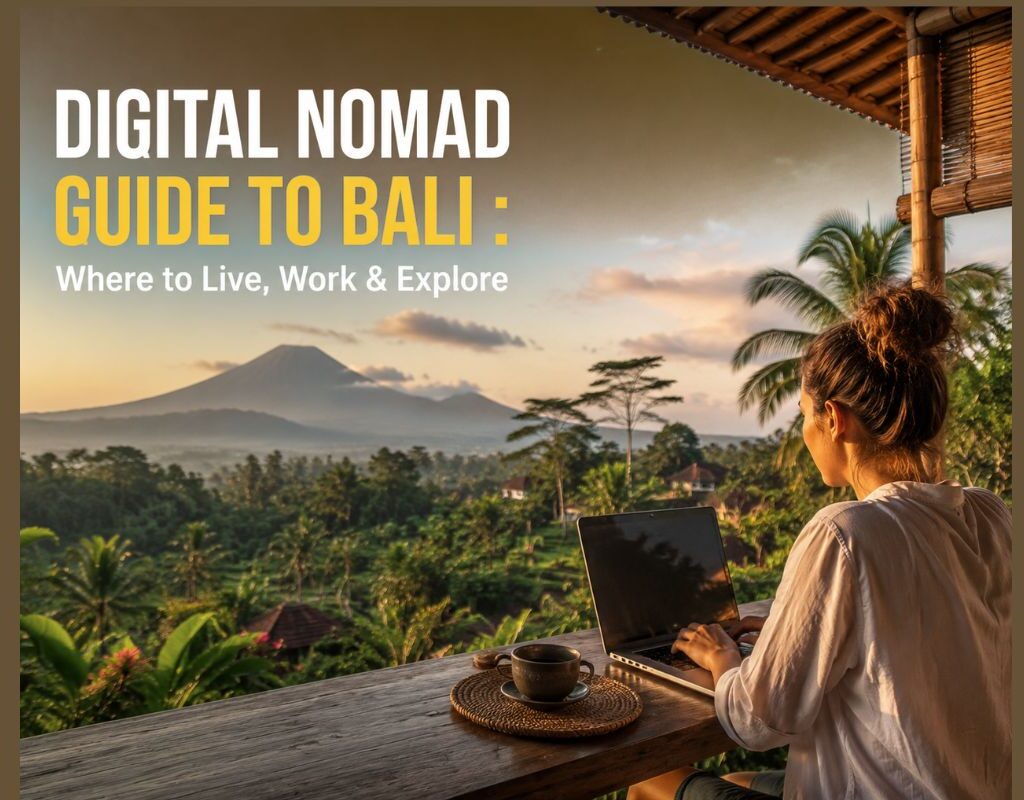
Bali has become one of the world’s best-known destinations for digital nomads, attracting freelancers, entrepreneurs, remote employees, content creators and location-independent professionals. With tropical beaches, coworking spaces, laptop-friendly cafés and a large international community, the island offers an appealing mix of work and lifestyle.
But living and working remotely in Bali involves more than finding a beautiful villa with Wi-Fi. Your experience depends on choosing the right neighbourhood, understanding monthly expenses, checking internet reliability, arranging suitable accommodation and confirming the correct immigration requirements for your situation.
Canggu is popular for its coworking culture and social scene, while Ubud appeals to people who prefer greenery and a slower pace. Seminyak offers restaurants and shopping, Uluwatu attracts surfers, and Sanur provides a calmer coastal atmosphere.
This Digital Nomad Guide to Bali explains where to stay, how to find a productive workspace, what to budget, how to get around and what to consider before making Bali your remote-work base.
Whether you are planning a few weeks or considering a longer stay, use this guide to compare your options and organise your trip with confidence.
Bali Digital Nomad Guide at a Glance
| Category | What to know |
|---|---|
| Best-known nomad hubs | Canggu and Ubud |
| Quieter alternatives | Sanur and selected areas outside the busiest centres |
| Coastal lifestyle | Canggu, Seminyak and Uluwatu |
| Currency | Indonesian rupiah (IDR) |
| Language | Indonesian; English is common in many tourist businesses |
| Internet | Often suitable in established coworking spaces, but check individual properties |
| Best season for outdoor activities | Generally April to October, with weather varying throughout the year |
| Main planning priorities | Immigration status, accommodation, connectivity, transport and budget |
Why Is Bali Popular With Digital Nomads?
Bali appeals to remote workers because it combines everyday work facilities with opportunities to explore outside working hours.
1. Coworking spaces and laptop-friendly cafés
Popular areas have coworking spaces with desks, air conditioning, meeting rooms, private offices and community events. Some cafés welcome laptop users, although policies, noise levels, power outlets and Wi-Fi quality differ.
For people who work online every day, a dedicated workspace can make it easier to separate work from leisure.
2. A large international community
Bali attracts people working across technology, marketing, design, consulting, content creation and other remote-friendly industries. Community events and coworking memberships can help newcomers meet people and build professional connections.
Networking opportunities vary by area and season, so choose a location that suits your interests rather than assuming every neighbourhood has the same atmosphere.
3. Different lifestyles in one destination
You can choose a busy surf-and-café environment, a greener inland base or a quieter coastal neighbourhood. This variety makes Bali attractive to people with different routines, budgets and preferences.
4. Outdoor activities after work
Depending on where you stay, you may be able to fit in surfing, yoga, beach walks, hiking, cultural visits or weekend excursions.
However, traffic can make journeys longer than expected. Choosing accommodation close to your workspace can be more valuable than choosing a villa with an impressive view far from everyday essentials.
Best Places to Live in Bali for Digital Nomads
Your neighbourhood affects your rent, commute, social life, transport costs and access to coworking spaces. Before booking a month-long stay, consider spending a few days in the area to see whether it suits your routine.
1. Canggu: Best for Coworking and Networking
Canggu is one of Bali’s most recognisable digital-nomad hubs. It offers coworking spaces, cafés, surf beaches, gyms, restaurants and a strong social scene.
Why choose Canggu?
- A wide selection of coworking and café options.
- Opportunities to meet other remote workers.
- Surfing, fitness studios and social activities.
- Plenty of accommodation styles, from shared rooms to private villas.
- Restaurants and cafés offering a range of cuisines.
Things to consider: Traffic can be heavy, popular streets can feel crowded, and accommodation near the busiest areas may be expensive. Some properties advertised as being in Canggu are actually a considerable ride from the main coworking areas.
Best for: Freelancers, entrepreneurs, social travellers and remote workers who enjoy a busy environment.
Accommodation: Compare hotels and guesthouses on Booking.com and stays on Trip.com. Check the map, recent reviews, Wi-Fi comments and cancellation terms before booking.
2. Ubud: Best for Nature and a Slower Routine
Ubud is inland, surrounded by green landscapes, rice terraces, temples and wellness businesses. It can be a good alternative for remote workers who prefer a creative atmosphere and easier access to nature.
Why choose Ubud?
- A variety of cafés and coworking options.
- Yoga, fitness and wellness activities.
- Cultural attractions and countryside excursions.
- Guesthouses and longer-stay accommodation.
- A more inland setting than Bali’s main beach districts.
Things to consider: Central Ubud can also experience traffic congestion. Accommodation outside the centre may be peaceful, but you might need transport to reach cafés, shops or a workspace.
Best for: Writers, designers, freelancers, wellness-focused travellers and people who prefer greenery to nightlife.
Accommodation: Browse Booking.com or Trip.com and compare the property’s actual location with your preferred workspace.
3. Seminyak: Best for Restaurants and Comfortable Stays
Seminyak offers a mix of restaurants, boutiques, beach venues and hotels. It can be convenient for remote workers who want a comfortable base with dining and shopping nearby.
Why choose Seminyak?
- A broad range of restaurants and cafés.
- Hotels, apartments and private accommodation.
- Shopping and beach access.
- A lively evening scene.
- Convenient access to other parts of southern Bali, depending on traffic.
Things to consider: Dining and nightlife can increase your monthly spending. Check whether a café is suitable for working before settling in for a long session, and consider coworking if you need privacy or regular video calls.
Best for: Remote professionals who value dining, shopping and comfortable accommodation.
Compare Seminyak accommodation on Booking.com or Trip.com.
4. Uluwatu: Best for Surfing and Coastal Scenery
Uluwatu, on Bali’s Bukit Peninsula, is known for dramatic cliffs, surf beaches and scenic coastal settings. It appeals to people who want outdoor activities to be a big part of their routine.
Why choose Uluwatu?
- Surfing and coastal walks.
- Scenic viewpoints and sunset spots.
- Villas and guesthouses.
- A more spread-out coastal lifestyle.
Things to consider: Accommodation and cafés can be spread out, and reliable coworking options may be less convenient depending on your exact location. Verify internet quality before committing to a long stay, and consider how you will travel to groceries, restaurants and your workspace.
Best for: Surfers, outdoor enthusiasts and remote workers who prefer a coastal environment.
Search Uluwatu accommodation on Booking.com or Trip.com.
5. Sanur: Best for a Calmer Coastal Base
Sanur offers a more relaxed atmosphere than some of southern Bali’s busiest visitor areas. It has a coastal promenade, restaurants, accommodation and access to boat services for some island journeys.
Why choose Sanur?
- A generally calmer pace.
- Coastal walks and seaside dining.
- Accommodation for different travel styles.
- A useful base for people who prefer quieter evenings.
- Access to Sanur Harbour for certain island transfers.
Things to consider: The coworking and networking scene may be less extensive than in Canggu. Check the workspace options and internet quality near the accommodation you are considering.
Best for: Remote workers seeking a quieter routine, couples and longer-stay visitors who do not need a busy nightlife scene.
Compare Sanur stays on Booking.com or Trip.com.
Which area should you choose?
- Choose Canggu if coworking, networking and social activities are priorities.
- Choose Ubud if you prefer nature, wellness and an inland setting.
- Choose Seminyak if dining, shopping and comfortable stays matter most.
- Choose Uluwatu if surfing and coastal scenery are central to your lifestyle.
- Choose Sanur if you want a calmer base and a more relaxed daily routine.
The best neighbourhood is not necessarily the one with the most attractive photos. For a productive stay, prioritise the distance between your accommodation, workspace and everyday essentials.
Coworking Spaces in Bali: How to Choose the Right Workspace
Bali has a variety of coworking spaces, from casual shared desks to professional workspaces with meeting rooms and dedicated offices.
Some venues offer day passes, while others have weekly or monthly memberships. Prices and facilities vary, so confirm the current details directly with the provider before making plans.
What to look for in a coworking space
Reliable connectivity: Ask about Wi-Fi performance and whether the venue has a backup connection.
Video-call facilities: Check for quiet areas, phone booths or private rooms if you regularly attend meetings.
Comfortable workstations: A proper desk, supportive chair, air conditioning and power outlets can make long workdays easier.
Opening hours: Check whether access is available outside standard daytime hours, especially if you work with clients in other time zones.
Community and events: Some spaces organise talks, workshops and social events. These can be useful if you want to build a network while travelling.
Membership flexibility: If you are staying for only a few weeks, a day or weekly pass may be more suitable than a monthly commitment.
What does coworking cost in Bali?
As a rough planning guide, day passes can cost around IDR 100,000–300,000, while monthly memberships may range from approximately IDR 1.5 million to IDR 4 million or more, depending on the location and facilities. These are indicative ranges, not guaranteed current prices. Confirm rates and membership conditions directly with each space. If you only need a desk occasionally, compare the total cost of day passes with a monthly membership. If you work full-time, reliable connectivity, a quiet environment and comfortable seating may justify the extra expense.
Internet in Bali: Wi-Fi, SIM Cards and Backup Connections
A beautiful villa is not a productive work base if the internet fails during important meetings. Connectivity should be one of your first checks when choosing accommodation.
Is the internet reliable in Bali?
Many established coworking spaces and accommodation providers offer internet suitable for everyday remote work. However, performance varies by building, network, neighbourhood and time of day.
Do not rely only on a listing’s claim of “fast Wi-Fi.” If possible, ask the host for a recent speed test and confirm whether the connection is shared with many guests.
Use a local SIM or eSIM
A local SIM or compatible eSIM can provide mobile data for maps, messaging, online bookings and backup connectivity. Before purchasing, check device compatibility, data limits, coverage and activation requirements.
A backup connection is especially useful if you depend on video calls or need to meet deadlines.
Test your accommodation before committing
For longer stays, check:
- Wi-Fi speed and stability.
- Mobile coverage inside the property.
- A suitable desk and chair.
- Power outlets near the workspace.
- Noise levels during working hours.
- Backup arrangements during outages.
If reliable connectivity is essential for your job, consider booking a shorter initial stay and extending only after testing the setup.
Cost of Living in Bali for Digital Nomads
Your monthly spending depends on the neighbourhood, accommodation type, dining habits, transport, coworking membership and lifestyle. A shared room and local meals can keep costs down, while a private villa, frequent cafés and paid activities can make the budget considerably higher.
The figures below are broad planning estimates in US dollars for one person. They are not fixed rates, and longer-term accommodation prices depend on dates, location, utilities and rental terms.
Estimated monthly expenses
| Expense | Budget-conscious | Comfortable |
|---|---|---|
| Accommodation | $350–$650 | $700–$1,200+ |
| Food and drinks | $200–$350 | $350–$550 |
| Transport | $50–$120 | $80–$180 |
| Coworking | $0–$80 | $90–$200 |
| Mobile data | $10–$20 | $10–$25 |
| Fitness and leisure | $50–$120 | $120–$300 |
| Illustrative subtotal | $660–$1,340 | $1,350–$2,455+ |
These ranges are budgeting examples rather than a promise that every traveller can live within them. They exclude international flights and may not include visa expenses, insurance, deposits, utilities, equipment, taxes or emergency savings. Current cost guides also show substantial differences depending on housing and lifestyle choices.
Budget, comfortable and premium lifestyles
Budget-conscious: Shared accommodation, local warungs, limited paid activities and occasional coworking passes. This requires careful planning and flexibility about location and amenities.
Comfortable: A private room or modest apartment, a mixture of local meals and cafés, regular coworking and some fitness or leisure spending.
Premium: A private villa, frequent dining out, dedicated workspace, private transport and regular excursions. This lifestyle can cost substantially more than the ranges above.
How to reduce monthly expenses
- Compare the total accommodation cost, including utilities, cleaning, deposits and fees.
- Ask whether a monthly rental has a different rate from nightly bookings.
- Stay near your regular workspace to reduce transport costs.
- Use local restaurants alongside cafés and international dining.
- Choose a coworking plan based on how many days you will actually use it.
- Track subscriptions, transport and small purchases throughout the month.
- Keep an emergency fund for medical needs, travel changes and unexpected expenses.
For accommodation research, start with Booking.com and Trip.com, then compare the total cost and terms before booking.
Accommodation Options for Longer Stays
Your accommodation is likely to be one of your largest expenses, so it is worth considering more than just the nightly rate.
Hotels
Hotels can be convenient for short stays or your first few nights. They may include cleaning, reception services and amenities, although workspace quality varies.
Guesthouses
Guesthouses can offer a more affordable private room and a local atmosphere. Check noise levels, Wi-Fi, laundry facilities and whether the property has suitable working space.
Apartments and villas
A private apartment or villa may offer more room and privacy. Before agreeing to a longer stay, confirm the rental period, utilities, internet, cleaning, security deposit, cancellation conditions and any restrictions on visitors or work.
Coliving spaces
Coliving properties combine accommodation with shared facilities and sometimes a coworking area or community events. They can be convenient for newcomers, but inclusions and house rules vary.
How to book wisely
Use Booking.com or Trip.com to compare short stays and available properties. For monthly rentals, review the full agreement and avoid sending deposits to unverified contacts.
Do not assume a listing includes reliable internet, a desk, electricity or all utilities in the displayed price. Confirm these details before paying.
Getting Around Bali While Working Remotely
Bali’s transport options include ride-hailing services, taxis, private drivers and scooters. The most suitable choice depends on where you live and how often you need to travel.
Ride-hailing apps and taxis
Ride-hailing services can be convenient for occasional trips, although availability and pickup arrangements vary. Check the fare and collection point before confirming your journey.
Scooter rentals
Scooters are common, but they involve risks and should not be treated as the default option for every visitor. Only ride if you meet local licensing requirements, have appropriate insurance and are confident riding in local traffic. Wear a helmet and never ride when tired or impaired.
Private drivers
A private driver may be useful for day trips, airport journeys or visiting several attractions. Confirm the itinerary, price, duration, waiting time and any extra fees in advance.
Airport transfers
For a smoother arrival, compare Booking.com airport transfer options before your trip. Confirm your flight details, pickup location, luggage requirements and cancellation terms.
Tours and activities
When you have time away from work, organised experiences can simplify planning and transport.
Review the meeting point, inclusions, duration and cancellation conditions before booking.
Food and Cafés in Bali
Bali has a wide food scene, ranging from inexpensive Indonesian meals to international restaurants and speciality cafés.
Popular local dishes include:
- Nasi goreng: Fried rice, often served with egg or other toppings.
- Mie goreng: Fried noodles.
- Satay: Skewered food served with accompanying sauces.
- Gado-gado: Vegetables with peanut sauce.
- Soto ayam: Indonesian chicken soup.
Warungs, which are small local eateries, can be useful for keeping food expenses under control. Cafés are popular for breakfast, coffee and informal meetings, but their suitability for long work sessions varies.
Before working from a café, check whether laptops are welcome, whether there are power outlets and whether the seating is comfortable. For important meetings or long workdays, a coworking space is often a better option.
Health, Safety and Travel Insurance
A longer stay requires more preparation than a short holiday. Think about medical access, personal safety, transport risks and the coverage you may need.
Everyday precautions
- Drink safe water and follow local health advice.
- Use sun protection and insect repellent where appropriate.
- Keep valuables secure and use reputable transport.
- Take care around beaches, cliffs and changing ocean conditions.
- Check recent reviews before choosing accommodation.
- Keep copies of important travel documents securely accessible.
Choosing travel insurance
Insurance policies differ in their medical limits, exclusions, emergency assistance, trip-disruption benefits and coverage for activities. If you plan to surf, ride a scooter or take part in other adventure activities, check whether those activities are covered and what conditions apply.
Compare the policy wording before purchasing:
Neither provider should be assumed to cover every traveller or every activity. Confirm eligibility, dates, exclusions and benefits directly with the insurer.
Visa and Immigration Considerations for Digital Nomads
Visa planning is one of the most important steps before working remotely from Bali.
Indonesia has different immigration options for different purposes. The appropriate route depends on your nationality, employment arrangement, income, intended length of stay and activities.
Indonesia lists an E33G Remote Worker Limited Stay Visa for eligible foreign nationals employed by companies outside Indonesia. Its conditions and documentation requirements must be checked against the official rules. A tourist or visit visa should not automatically be assumed to authorise every type of remote-work arrangement.
Before travelling:
- Identify the visa or stay permit that matches your circumstances.
- Check the permitted activities and employment conditions.
- Verify income, employment and documentation requirements.
- Confirm the permitted stay duration and extension rules.
- Use official Indonesian immigration information or contact the relevant Indonesian embassy or consulate if anything is unclear.
Start with the official Indonesian immigration e-Visa website.
Official resources:
- Indonesia Immigration — Official e-Visa Website — Check visa options and apply where eligible.
- All Indonesia Arrival Card — Official Website — Complete the required arrival declaration.
- Directorate General of Immigration — Indonesia — Official immigration information.
- Indonesia Ministry of Foreign Affairs — Official government and consular resources.
Immigration rules can change. Do not rely solely on social media posts, old blog articles or advice from other travellers when making a visa decision.
Things to Do in Bali After Work
One of Bali’s biggest advantages is the range of activities available outside working hours. The best choices depend on your location and the time you can spare.
Surfing and beach walks
Canggu and Uluwatu are popular for surfing, while other coastal areas offer opportunities for a relaxed walk or sunset. Check sea conditions and follow local advice.
Yoga and fitness
Yoga studios, gyms and wellness classes are available in several visitor areas. Compare schedules, membership prices and location before committing to a plan.
Rice terraces and waterfalls
Ubud and the surrounding countryside provide access to rice terraces, waterfalls and scenic routes. Plan excursions around traffic and daylight, rather than trying to fit too many stops into one evening.
Temples and cultural experiences
Visit temples respectfully, follow dress requirements and check local rules before taking photographs or entering sacred areas.
Weekend tours
If you have a full day free, consider a guided excursion or an island trip. Compare GetYourGuide and Viator, checking the itinerary, transportation, inclusions and cancellation terms.
Packing Essentials for Working Remotely in Bali
A practical packing list should cover both your work setup and tropical conditions.
- Laptop and charger.
- Universal travel adapter compatible with your devices.
- Headphones for calls and focused work.
- Portable power bank.
- Lightweight clothing.
- Comfortable walking shoes or sandals.
- Sunscreen and suitable insect repellent.
- Reusable water bottle.
- Small daypack.
- Rain jacket or compact umbrella during wetter months.
- Any necessary prescription medication and travel documents.
A laptop stand or portable keyboard may be useful if you work long hours, but check your baggage allowance before packing additional equipment.
Common Mistakes Digital Nomads Should Avoid
Choosing accommodation based only on photos
A beautiful villa may be far from shops, coworking and transport. Check the map and recent reviews, and confirm the internet setup before committing to a long stay.
Underestimating traffic
Travel times can vary significantly. Avoid scheduling important meetings immediately after a cross-island journey, and choose accommodation close to your usual workspace when possible.
Relying on one internet connection
Have a backup data option if your work depends on uninterrupted connectivity. Test the connection before an important call or deadline.
Underestimating the real budget
Rent is only one expense. Include food, transport, coworking, mobile data, insurance, immigration costs and leisure spending in your monthly plan.
Assuming a tourist visa permits remote work
Check the rules that apply to your nationality and work arrangement through official immigration sources before travelling.
Booking a long stay without checking the terms
Confirm the rental period, utilities, deposit, internet, cancellation policy and any additional fees before paying.
Plan Your Bali Adventure with Trips With Sam
Working remotely does not mean you have to miss Bali’s best experiences. With a suitable base and a realistic schedule, you can balance work with beaches, cultural visits, local food and weekend excursions.
The Trips With Sam Bali Insider Guide + Interactive Map can help you organise your sightseeing research with curated places, travel inspiration and an interactive map.
Explore the Bali Insider Guide →
For more personalised support, visit Personalized Travel Planning or explore Premium Travel Itineraries.
Recommended Travel Booking and Insurance Tools
Use these resources to compare accommodation, activities, transfers and travel insurance for your Bali stay.
Hotels and accommodation
Tours and activities
Airport transfers
Travel insurance
Affiliate disclosure: Some links in this article are affiliate links. Trips With Sam may earn a commission from qualifying bookings or purchases at no additional cost to you. Prices, availability, eligibility and terms are determined by the relevant provider.
Frequently Asked Questions
Is Bali a good destination for digital nomads?
Bali can be a good option for remote workers who value coworking spaces, cafés, an international community and outdoor activities. The best fit depends on your budget, work schedule, accommodation needs and preferred lifestyle.
Which area in Bali is best for digital nomads?
Canggu is popular for coworking and networking. Ubud suits people who prefer nature and wellness, Seminyak offers dining and shopping, Uluwatu appeals to surfers, and Sanur is a quieter coastal alternative.
How much does it cost to live in Bali as a digital nomad?
Costs vary by neighbourhood and lifestyle. As a rough planning example, a budget-conscious person might spend around $660–$1,340 per month, while a more comfortable lifestyle may cost $1,350–$2,455 or more. These estimates exclude international flights and may exclude visa fees, insurance, deposits and other additional expenses.
Is the internet reliable enough for remote work?
Many coworking spaces and accommodation providers offer suitable internet, but performance varies. Ask for recent speed information, check reviews and arrange backup mobile data if reliable connectivity is essential.
Can I work remotely from Bali?
Whether you may work remotely while in Indonesia depends on your circumstances and the conditions of the visa or stay permit you hold. Check the official immigration requirements for your employment arrangement before travelling.
Is Bali suitable for long-term stays?
It can be, provided you plan accommodation, connectivity, monthly expenses, transport and immigration requirements carefully. Test the neighbourhood and workspace before committing to an extended rental.
Do digital nomads need travel insurance?
Insurance is worth considering for medical emergencies, travel disruptions and eligible unexpected expenses. Read the policy wording and confirm coverage for your activities, especially scooter riding and adventure sports.
Final Thoughts
Bali offers several different ways to build a remote-work routine. Canggu suits people who want coworking and social opportunities, Ubud provides a greener setting, Seminyak combines dining and shopping, Uluwatu appeals to surfers, and Sanur offers a calmer coastal alternative.
The key to a successful stay is to choose a neighbourhood that supports your everyday work, not just your holiday plans. Confirm your immigration requirements, test your internet connection, calculate the full monthly budget and compare accommodation carefully before committing.
With thoughtful preparation, Bali can offer a rewarding balance of productive work and time spent exploring Indonesia.
⸻
More Bali & Indonesia Travel Guides
- Luxury Hotels in Indonesia: Best Deals & Luxury Stays 2026
Luxury Hotels Indonesia Deals 2026 - Hidden Bali Spots Tourists Miss: Secret Places to Explore
Hidden Bali Spots Tourists Miss - Digital Nomad Guide to Bali: Where to Live, Work & Explore
Digital Nomad Guide to Bali - Backpacking Itinerary for Bali: 7–10 Days Guide
Backpacking Itinerary for Bali: 7–10 Days Guide