
Buen Camino — A 12-Day Journey
The Camino de Santiago, Spanish for the Way of Saint James, is one of Europe’s most recognised pilgrimage journeys. Its network of historic walking routes crosses Spain and neighbouring countries, eventually leading to Santiago de Compostela in Galicia, northwestern Spain.
For more than a thousand years, pilgrims have travelled these paths towards the cathedral of Santiago de Compostela, traditionally believed to house the remains of Saint James the Greater. Today, people walk the Camino for many reasons: faith, personal reflection, adventure, cultural discovery or simply the desire to experience a journey at a different pace.
But the Camino is not simply a route from one town to another. It is an experience that unfolds slowly, through quiet landscapes, conversations with strangers, small cafés, village streets and moments of unexpected clarity.
This 12-day Camino de Santiago itinerary follows the final stretch of the Camino Francés, beginning in Sarria and finishing in Santiago de Compostela. It is designed for travellers who want to experience the Camino without rushing, with shorter walking days, comfortable accommodation and enough time to appreciate the places along the way.
The distance from Sarria to Santiago is approximately 115 km, although the exact total varies according to the route taken and the location of your accommodation. Rather than following the more demanding traditional five-day schedule, this itinerary divides the walk into manageable stages and includes a rest day in Melide.
Understanding the Camino de Santiago
There is no single starting point for the Camino de Santiago. It is a network of routes, with different starting locations depending on how much time you have and how far you wish to walk.
All the main routes lead towards Santiago de Compostela, where the journey traditionally concludes at the cathedral.
Three popular starting points are:
1. Saint-Jean-Pied-de-Port — The Classic Camino
Located in France, Saint-Jean-Pied-de-Port is one of the best-known starting points for the Camino Francés. The full route to Santiago is approximately 780 km and crosses the Pyrenees before continuing through northern Spain.
This is a much longer undertaking, generally requiring several weeks of walking.
2. Sarria — The Final 100 km
Sarria is one of the most popular starting points for people who have limited time but still want to experience a meaningful section of the Camino.
The walk from Sarria to Santiago is approximately 115 km. It is commonly completed in five to seven walking days, although a slower itinerary can spread the journey across a longer period.
Walking at least the final 100 km is the minimum distance requirement for the Compostela certificate. Pilgrims must also carry an authorised pilgrim credential and collect at least two stamps per day over the final 100 km. Check the current requirements with the Pilgrim’s Reception Office before travelling.
3. León — A Longer Middle Route
León offers a longer alternative for travellers who want more time on the Camino without beginning in France. The distance to Santiago is approximately 300 km, depending on the route and variations taken.
It generally requires two to three weeks and offers a deeper experience of the Camino’s landscapes, villages and changing regions.
The 12-Day Camino de Santiago Journey at a Glance
This itinerary is based on a relaxed walking schedule, with an arrival day in Sarria, a rest day in Melide and a final arrival in Santiago.
- Starting point: Sarria, Galicia, Spain
- Finishing point: Santiago de Compostela, Galicia, Spain
- Approximate walking distance: 115 km
- Walking days: 10
- Rest days: 1
- Arrival and departure days: Included in the 12-day schedule
- Typical daily walking distance: Approximately 6–20 km
- Difficulty: Easy to moderate for reasonably prepared walkers, although some stages include hills and uneven terrain
- Travel style: Relaxed, comfortable and unhurried
The route follows:
Sarria → Morgade → Portomarín → Gonzar → Palas de Rei → Melide → Boente → Arzúa → Salceda → O Pedrouzo → Santiago de Compostela
The daily distances are approximate and can change depending on your accommodation, the exact trail taken and any additional walking around the towns.
Getting to Sarria: Arrival in Galicia
Your journey begins at Santiago de Compostela Airport (SCQ), in Galicia.
Although Santiago is where you land, it is not where this walking itinerary begins. Sarria is approximately 110–120 km away by road, and you will need to arrange onward transport before beginning the Camino.
There are two main options:
Private transfer: A pre-arranged car transfer is the most convenient option, particularly if you are travelling with luggage. The journey generally takes around 2.5–3 hours, depending on traffic and the exact destination.
Train: You can also travel towards Sarria by train, although the journey may involve a connection, commonly through Lugo. Check current schedules and connections before departure.
For a comfortable arrival, I recommend arranging your transfer in advance, checking in to your accommodation and allowing yourself time to settle before the first walking day.
Your Camino Francés journey begins in Sarria.
Day 1 — Arrival in Sarria: A Gentle Beginning
You arrive with a full bag and a fuller mind.
The streets are quiet, but something in the air feels shared, as though everyone here is carrying a story.
You don’t know what yours will be yet.
Your journey begins in Sarria, a small Galician town that quietly hums with anticipation. Pilgrims arrive from different corners of the world, each carrying their own reasons for being here. Some are travelling for spiritual reasons, others for adventure, and many simply want to experience the Camino for themselves.
After your transfer from Santiago de Compostela, check in at Hotel Alfonso IX, a convenient base for settling into the town before the walk begins.
Take some time to explore Sarria’s old streets, stone buildings and small cafés. There is no need to fill the afternoon with activities. A gentle walk is enough to introduce you to the atmosphere of the place.
This is also a good time to collect your pilgrim credential, the document on which you will collect stamps along the route. You can obtain one through an authorised Camino association or an official distribution point.
Keep lunch light and allow yourself time to prepare your walking clothes, shoes and daypack. If you intend to use a luggage-transfer service, confirm the arrangements before the first stage.
As evening approaches, enjoy a relaxed dinner at Restaurante Mar de Plata, where traditional Galician flavours provide a fitting introduction to the region.
The night ends early. Tomorrow is not about rushing. It is about beginning.
Travel Tip: Arrange luggage transfer in advance if you prefer to walk with only a small daypack. Check the service’s collection points, delivery arrangements and daily cut-off times.
Day 2 — Sarria to Morgade: Forest Paths and First Impressions
Approximate distance: 13 km
First steps. A little excitement. A little uncertainty.
You hear your first:
“Buen Camino.”
It feels small, but it stays with you.
The morning begins early, with soft light filtering through Sarria’s quiet streets. There is a subtle shift in energy. You are no longer arriving. You are starting.
The Camino soon leads you into shaded woodland, quiet countryside and small Galician villages. Stone houses appear along the route, and the familiar yellow arrows guide you forward. You begin to understand how naturally the walking rhythm develops.
A welcome pause comes at Café Bar A Pena, where pilgrims gather over coffee and simple breakfasts. Conversations are often brief, but there is an immediate sense of connection among people walking in the same direction.
As the kilometres pass, your body begins to find its rhythm. The walk is not simply about reaching the next village. It asks you to be present. You notice the sound of your footsteps, the coolness of the air and the changing landscape around you.
By early afternoon, you arrive in Morgade, a small and peaceful village that feels removed from the distractions of everyday life.
Check into Casa Morgade, a rural stay that offers a simple and welcoming place to rest.
Dinner is best kept relaxed. Home-style cooking and local ingredients suit the atmosphere of the day. There is no need for anything elaborate.
As evening settles in, the realisation is subtle but clear: the journey has begun, not just on the road, but within.
Travel Tip: Start walking around 7:30–8:00 AM when conditions allow. Cooler temperatures and quieter trails can make the morning more enjoyable, particularly during warmer months.
Day 3 — Morgade to Portomarín: An Iconic Arrival
Approximate distance: 9–10 km
Your feet are beginning to feel the road.
You question yourself for a moment:
“Why am I doing this?”
Then something small happens. A stranger smiles. A coffee tastes better than usual. The silence feels different.
The morning feels lighter today, both in distance and in spirit. The path continues through open countryside, small settlements and gentle stretches that invite you to walk without constantly thinking about the destination.
There is a quiet confidence now. You are no longer adjusting to the experience. You are beginning to settle into it.
As you approach Portomarín, the landscape opens up towards the Belesar reservoir. The long bridge leading into town creates one of the most memorable arrival moments of the journey.
Portomarín has a distinctive history. Much of its original settlement was relocated when the Belesar reservoir was created, and important historic buildings were moved to higher ground. The town’s stone architecture and elevated setting make it a particularly memorable stop.
Check into Hotel Vistalegre Spa, where a comfortable room and the possibility of a spa session offer a welcome reset after the walk.
Spend the afternoon exploring the town at your own pace. Visit the hilltop Church of San Nicolás, walk through the quieter streets and enjoy the views over the surrounding landscape.
For dinner, consider O Mirador and enjoy a relaxed meal featuring local Galician dishes.
The day ends without urgency. You have walked a relatively short distance, but the experience has given you much more than the kilometres suggest.
Travel Tip: Use shorter walking days to recover properly. Hydration, a good meal and time to rest can make the following stages considerably more comfortable.
Day 4 — Portomarín to Gonzar: Slowing Into the Journey
Approximate distance: 8 km
You stop checking your phone as often.
Walking becomes more natural. You begin to notice the trees, the sounds around you and the rhythm of your own breathing.
There is no urgency this morning. The distance ahead is short, and for the first time, you truly feel that you have time.
Leaving Portomarín, the trail gradually climbs through Galician countryside. The landscape changes between open fields, wooded sections and small settlements. The route is not entirely flat, but the shorter distance allows you to take it slowly.
You stop when you feel like stopping. Coffee tastes better when there is no rush to finish it. Even brief conversations with other pilgrims begin to feel more meaningful.
By midday, you arrive in Gonzar, a small settlement along the Camino Francés.
Check into Casa García, a simple countryside accommodation option. Confirm the property’s current location and availability when booking, as accommodation listings and names can change.
The afternoon is deliberately unstructured. You might take a short walk, read, rest or simply enjoy the quiet surroundings.
Dinner is best kept simple. There is something comforting about sharing a meal with fellow travellers after a day spent outdoors.
The Camino is beginning to change your relationship with time. You are no longer trying to fit everything into a day. You are allowing the day to unfold.
Travel Tip: Do not rush through the shorter stages. These quieter days are an important part of a slower Camino experience.
Day 5 — Gonzar to Palas de Rei: Finding Your Flow
Approximate distance: 15–17 km
Today, the walk feels more structured. A steady rhythm has replaced some of the uncertainty of the early days.
The route moves through rolling countryside, farmland and small Galician villages. The landscape is familiar now, but it never feels entirely repetitive. Each stretch offers a different view, a different place to pause and another opportunity to meet fellow pilgrims.
You begin to understand your own pace. You know when you need a break, when you want to walk quietly and when a conversation makes the kilometres pass more easily.
Arriving in Palas de Rei brings a noticeable change in atmosphere. There are more services, more places to eat and a stronger sense of activity.
Check into Hotel Alda Palas de Rei, a convenient option for resting after a longer walking day. Check the property name and room details on the booking page before confirming your stay.
In the evening, enjoy dinner at Pulpería A Garnacha, where traditional Galician food offers a satisfying introduction to the region’s culinary character.
You rest well tonight. Your body has begun to understand the journey.
Travel Tip: This is a good point to review your walking equipment. Check your footwear, socks, backpack straps and any areas where you are experiencing discomfort. Small adjustments now can make the remaining stages easier.
Day 6 — Palas de Rei to Melide: A Lively Pause
Approximate distance: 14–15 km
The trail today carries a sense of purpose. You walk with more familiarity, moving through shaded paths, woodland and small villages with greater ease.
Melide welcomes you with a different energy. It is one of the more lively towns along this section of the Camino, with cafés, restaurants and plenty of opportunities to meet other walkers.
Check into Hotel Lux Melide, a centrally located option that offers a comfortable place to settle in.
Melide is particularly well known for pulpo a la gallega, the traditional Galician octopus dish usually served with olive oil, paprika and potatoes. Finding a local pulpería and enjoying this regional speciality is one of the simple pleasures of stopping here.
The evening feels different from the quieter villages. There is more conversation, more movement and more life.
You are no longer simply passing through the Camino. You are becoming part of its rhythm.
Travel Tip: Melide is a popular overnight stop, so it is sensible to reserve accommodation in advance, particularly during busy walking seasons.
Day 7 — Melide: Rest, Reset and Quiet Moments
There is no walking today.
And that changes everything.
The morning begins slowly. No early alarm, no urgency and no need to prepare your daypack. Just a long breakfast and the quiet luxury of time.
After several days of walking, a rest day gives your body an opportunity to recover. It also allows you to experience Melide without thinking about the next stage.
Stop at Café Bar O Tobo do Lobo for coffee, or simply wander through town without a plan. You might explore the local streets, enjoy a relaxed lunch or spend the afternoon reading.
You will notice the difference gradually. Your body feels lighter, your mind quieter, and the usual pressure to keep moving begins to disappear.
The day is yours to spend as you wish. A short walk, a quiet afternoon or simply doing nothing at all can be enough.
Travel Tip: A rest day can make a long walking itinerary more comfortable, especially if you are not accustomed to covering several kilometres on foot each day. Listen to your body rather than treating every stage as a challenge to complete.
Day 8 — Melide to Boente: A Gentle Return
Approximate distance: 6 km
Your bag feels lighter, even if it isn’t.
Your mind does too.
You laugh more. You smile more. The path feels familiar now, and returning to it after a rest day is almost effortless.
Leaving Melide, the route continues through woodland and quiet countryside. Today’s walk is short, allowing you to move without pressure and enjoy the landscape rather than concentrate on reaching the next destination.
You arrive in Boente before the day has fully unfolded.
Check into Casa Saleta, a countryside accommodation option that offers a welcoming place to rest.
The afternoon is yours. Read, relax, enjoy the quiet or spend some time outside taking in the surrounding landscape.
There is no need to make the day feel bigger than it is. Sometimes the simplest stages become the most memorable.
Travel Tip: Even on a short walking day, carry enough water and a few small snacks. Services can vary between villages, and it is always useful to be prepared.
Day 9 — Boente to Arzúa: A Balanced and Easy Stage
Approximate distance: 10 km
The rhythm returns, steady, comfortable and familiar.
The path continues through small settlements and green Galician countryside. You no longer feel the same uncertainty that accompanied your first steps in Sarria. Walking has become part of your day rather than something you are constantly preparing yourself to do.
Arzúa welcomes you with a relaxed atmosphere and a little more activity.
Check into Hotel Arzúa, a convenient base for exploring the town and resting before the next stage.
Arzúa is known for its local cheese, particularly Queixo Arzúa-Ulloa, a creamy, mild cheese that is an important part of the region’s food culture.
For dinner, Casa Nené offers an opportunity to enjoy local flavours in a relaxed setting. It is a good evening to take your time over the meal and appreciate how much has changed since your arrival in Sarria.
The evening feels simple and complete.
Travel Tip: Take advantage of towns such as Arzúa to restock small essentials, including snacks, water and blister-care supplies.
Day 10 — Arzúa to Salceda: Quiet Forest Paths
Approximate distance: 11 km
Today’s walk is calm and uninterrupted.
The trail moves through forested stretches, quiet villages and shaded paths. There are moments when the surrounding countryside seems to fall silent, leaving only the sound of your footsteps.
You are approaching the final stages of the Camino, but there is no need to think too far ahead. The experience is still unfolding, and the quieter sections deserve your attention.
Arrive in Salceda and check into Albergue Turístico Salceda, a practical stop before the final approach to Santiago.
The accommodation is a chance to rest, organise your belongings and enjoy a peaceful evening.
There is a growing awareness that the journey is nearly over. Tomorrow, you will be closer to Santiago than ever before.
The quiet here feels intentional, like a pause before something important.
Travel Tip: Prepare your daypack and walking clothes the evening before. A comfortable, organised start will make the final two stages easier.
Day 11 — Salceda to O Pedrouzo: Preparing for the End
Approximate distance: 9 km
The walk is short, but there is a quiet awareness that this is your final full day before reaching Santiago.
The route continues through the familiar landscape of Galicia, with woodland, small settlements and gentle stretches of countryside. You are walking towards the end, but part of you may already be reluctant to arrive.
There is something different about the conversations today. People begin talking about the cathedral, the final walk and what they hope to feel when they reach the square.
Arrive in O Pedrouzo and check into Hotel O Pino, a practical place to rest before the final stage.
Dinner at Regueiro is best kept early and relaxed. You have one more walk ahead, and there is no reason to make the evening complicated.
Pack your bag carefully tonight. Check your walking shoes, water, credential and anything else you need for the morning.
Tomorrow is not simply another day on the trail. It is the conclusion of a journey that began with uncertainty in Sarria.
Travel Tip: Get a good night’s sleep and begin early if you want to experience the quieter morning atmosphere. Check the weather forecast and allow enough time for the final walk into Santiago.
Day 12 — O Pedrouzo to Santiago de Compostela: The Arrival
Approximate distance: 19–20 km
The day begins in darkness.
You step outside, adjust your backpack and begin walking. The familiar path leads you through woodland and small settlements, but today everything feels different.
The sky slowly changes colour. The morning light settles over the landscape, and each step brings you closer to Santiago.
The transition from countryside to city is gradual but unmistakable. You pass through the outskirts, continue towards the historic centre and eventually find yourself walking through the narrow streets of Santiago de Compostela.
And then, suddenly, you are there.
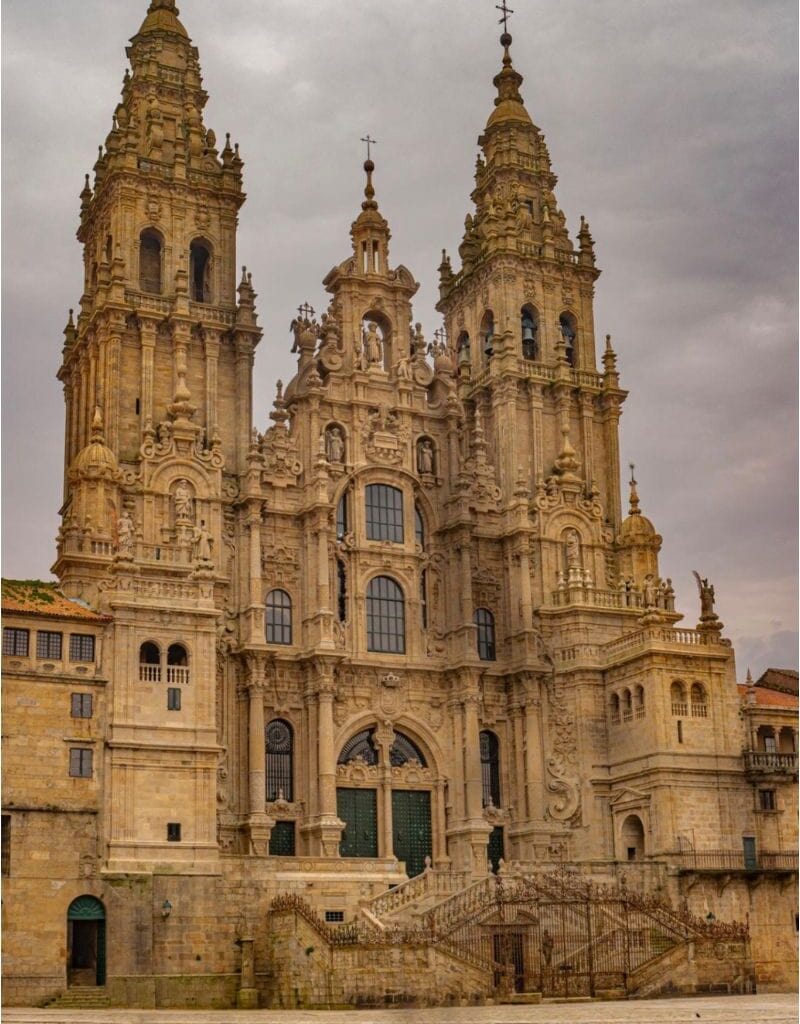
The streets open towards the grand square, and the cathedral stands before you. Pilgrims gather in the Plaza del Obradoiro. Some celebrate, some take photographs, and others simply sit in silence.
You may feel exhausted. You may feel emotional. You may not know exactly what you feel at all.
But you have arrived.
Check into Hotel Palacio del Carmen, a peaceful retreat just outside the busiest streets, offering a comfortable place to rest after the final walk.
For your final evening, consider Abastos 2.0, where contemporary Galician cooking provides a memorable way to celebrate the end of the journey.
There is no need to rush this moment. Spend time around the cathedral, explore the historic streets and allow yourself to absorb what you have completed.
You have arrived in Santiago.
But perhaps the most important part of the journey is what you carry away from it.
You didn’t simply walk across Galicia. You gave yourself twelve days to slow down, notice more and experience a different relationship with the world around you.
You arrived somewhere within yourself.
Travel Tip: If you wish to obtain the Compostela, visit the Pilgrim’s Reception Office and follow its current registration procedure. Keep your pilgrim credential safe, with the required stamps collected along the route.
Practical Tips for Walking the Camino de Santiago
A comfortable Camino experience begins with preparation. You do not need expensive equipment, but a few thoughtful decisions can make the journey much easier.
Choose comfortable walking shoes. Wear footwear that you have already tested on longer walks. Avoid starting the Camino in brand-new shoes, as friction and blisters can quickly become uncomfortable.
Carry a light daypack. Pack only what you need for the day’s walk: water, snacks, a light layer, sun protection, your credential and personal essentials. If you are using a luggage-transfer service, confirm its rules and collection arrangements.
Collect your pilgrim stamps. Your credential records the places you pass through. If you intend to apply for the Compostela, remember that the official requirement for walkers includes at least two stamps per day over the final 100 km. Collect them at churches, accommodation, cafés or other authorised points along the route.
Book accommodation ahead. The Camino has a range of accommodation, from traditional pilgrim hostels to private guesthouses and hotels. Booking ahead is particularly useful if you prefer private rooms or are travelling during busy periods.
Prepare for changing weather. Galicia can be wet, even when the forecast looks promising. A light waterproof jacket, suitable layers and a rain cover for your backpack are useful additions.
Look after your feet. Take breaks when necessary, change into dry socks if needed and deal with hotspots before they develop into blisters. Do not ignore persistent pain.
Eat and drink regularly. Carry water and small snacks, and take advantage of cafés and village stops along the route. A proper meal at the end of the day helps you recover.
Respect the Camino. Follow the marked route, be considerate of local communities and other pilgrims, and leave the countryside as you found it.
When Is the Best Time to Walk the Camino?
Spring and autumn are popular seasons for walking the Camino Francés through Galicia.
Spring: April, May and early June bring greener landscapes and generally comfortable walking conditions. Rain is possible, so waterproof clothing is important.
Summer: June, July and August offer longer daylight hours and a lively Camino atmosphere. However, the route can become busy, and walking during the hottest part of the day may be uncomfortable.
Autumn: September and October can be particularly pleasant, with cooler temperatures and a quieter atmosphere than the peak summer months. Rain becomes more likely as the season progresses.
Winter: Walking is possible, but weather conditions can be more challenging. Shorter daylight hours, rain and colder temperatures require additional preparation.
For a relaxed walking experience, late spring and early autumn are often good choices, although the best dates depend on your weather preferences and tolerance for busier trails.
Travel Smart and Stay Protected
Even a carefully planned walking holiday can involve unexpected situations, from flight delays and lost luggage to illness or an injury on the trail.
Travel insurance is worth arranging before departure. Check that your policy covers the activities you intend to undertake, medical treatment, emergency assistance and any relevant walking or hiking conditions.
Get travel insurance with World Nomads
Read the policy details carefully to understand what is and is not covered.
Download the Complete Camino de Santiago Itinerary
The Camino is a journey best experienced at your own pace. If you would like to keep your travel planning organised, the complete Camino de Santiago itinerary is available as a downloadable PDF inside the Trips With Sam Premium Travel Library.
The library includes 100+ travel itineraries covering destinations around the world, designed to help you plan your next journey with greater ease.
View the Trips With Sam Premium Travel Library
Lifetime access • All itineraries included
Plan Your Next Journey with Trips With Sam
Every traveller has a different idea of the perfect journey. Some prefer a carefully structured itinerary, while others want room for spontaneous discoveries.
Trips With Sam offers personalised travel-planning services shaped around your interests, travel style and budget. Whether you are planning a walking holiday in Spain, a European escape or a longer journey, I can help you create a travel plan that feels right for you.
Plan Your Perfect Trip with Trips With Sam
Some links in this article are affiliate links. If you make a booking through them, Trips With Sam may earn a commission at no additional cost to you. This helps support the website and its travel content.
Curated by Sam Bhandari — Trips With Sam