
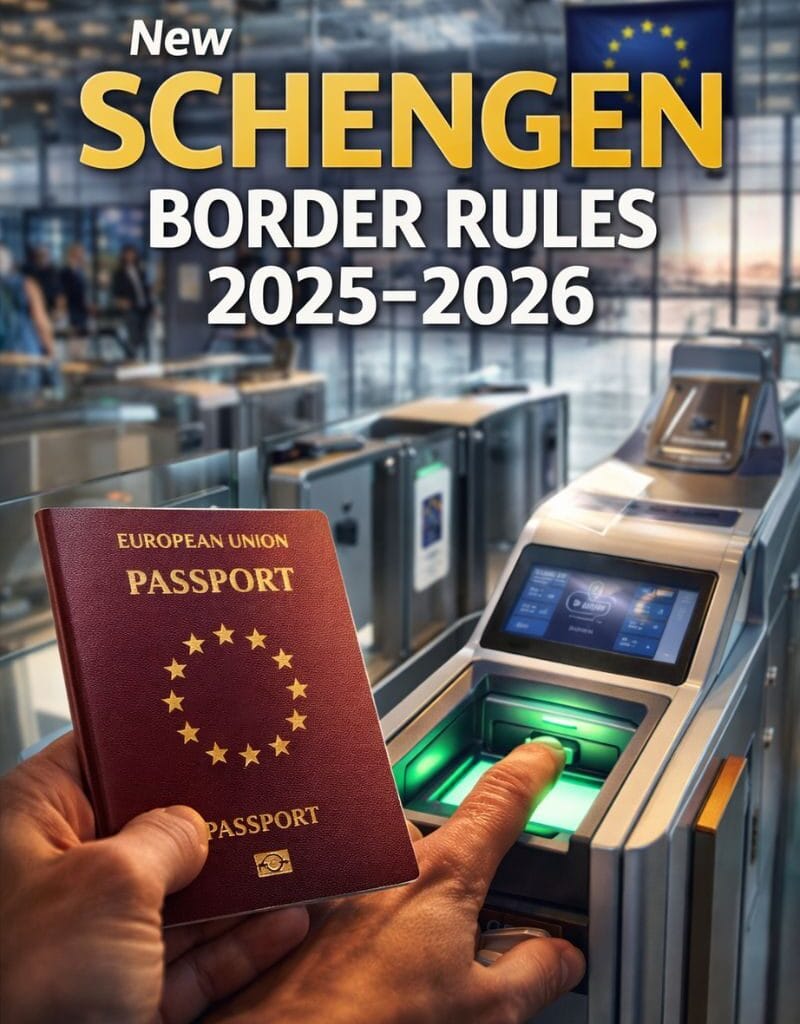
Traveling to Europe is set to become more secure and digitally streamlined with the introduction of the European Union’s new Entry/Exit System (EES). This system will replace traditional passport stamping with biometric verification for travelers entering the Schengen Area.
If you are planning a trip to Europe in 2025 or 2026, it’s important to understand how these new rules will affect your travel experience.
⸻
🌍 What is the Schengen Entry/Exit System (EES)?
The Entry/Exit System (EES) is a digital border control system introduced by the European Union to monitor the movement of non-EU travelers visiting the Schengen Area for short stays.
Instead of manually stamping passports, border authorities will now digitally record:
•Passport details
•Date and place of entry/exit
•Biometric data (fingerprints and facial image)
•Duration of stay
This system applies to travelers staying up to 90 days within a 180-day period.
⸻
📅 When Will the New System Be Implemented?
The rollout of the Entry/Exit System will take place in phases:
•Start Date: 12 October 2025
•Gradual rollout period: October 2025 to April 2026
•Full enforcement: 10 April 2026
During the transition phase, some borders may still use traditional passport stamping alongside biometric registration. However, after full implementation, biometric checks will become mandatory at all external Schengen borders.
⸻
🧠 What Biometric Data Will Be Collected?
When entering the Schengen Area, travelers may be required to provide:
•Fingerprints (typically four fingers)
•Facial photograph
•Passport scan and verification
This data is stored securely in a centralized EU database and will be reused for future entries, making repeat travel more efficient.
⸻
🎯 Who Does the System Apply To?
The Entry/Exit System applies to:
•Tourists from non-EU countries
•Short-term visa holders (Schengen visa)
•Visa-free travelers (e.g., from India, UK, US, etc.)
It does not apply to:
•EU citizens
•Schengen residents
•Long-term visa holders
⸻
🚫 Why Is the EU Introducing This System?
The primary objectives of the new system are:
•Strengthening border security
•Reducing identity fraud
•Tracking overstays automatically
•Replacing outdated manual passport stamping
•Improving overall border management efficiency
⸻
⚙️ How Will the Process Work at the Border?
First-time entry:
•Passport is scanned
•Fingerprints are captured
•Facial image is taken
•Data is stored in the system
Subsequent entries:
•Faster verification using stored biometric data
•Reduced manual processing
•Shorter verification time
⸻
⏱️ Will This Increase Waiting Time?
During the initial rollout phase, travelers may experience slightly longer processing times, especially for first-time registration.
However, over time:
•The process is expected to become faster
•Dedicated lanes may be introduced
•Frequent travelers will benefit from quicker verification
⸻
📉 What Changes for Travelers?
Before:
•Passport stamps on entry and exit
•Manual tracking of travel history
After:
•Digital records of all entries and exits
•No passport stamping (once fully implemented)
•Automated tracking of overstays
•Biometric verification at borders
⸻
🔮 What Comes Next? ETIAS
Following the Entry/Exit System, the European Union will introduce ETIAS (European Travel Information and Authorisation System).
This will require visa-free travelers to apply online for travel authorization before entering the Schengen Area, similar to systems like ESTA in the United States.
⸻
🧳 Final Thoughts
The new Schengen biometric border system represents a major modernization of European travel procedures. While it may require a few extra steps initially, it is designed to make travel:
•More secure
•More efficient
•More streamlined in the long term
If you are planning a Europe trip in the coming years, staying informed about these changes will help you prepare better and avoid surprises at immigration.
⸻
Final Thoughts-
If you’re planning a Europe trip, destinations like Italy remain among the most popular choices in the Schengen zone. You can explore curated Italy travel deals and special offers here 👉 [Italy Getaway with 15% Discount]